Inspections and revisions of electrical equipment are mandatory tasks required by law and technical standards, the purpose of which is to ensure the safe operation of electrical installations and equipment.
Revisions and inspections of electrical appliances - STN 33 1610
Classification of electrical appliances according to their use: | |
| group A | Appliances provided on a rental basis to another user. |
| group B | Appliances used in outdoor environments (construction, agriculture, etc.). |
| group C | Appliances used for industrial and craft activities in indoor locations. |
| group D | Appliances used in public areas (schools, clubs, hotels, etc.). |
| group E | Appliances used for administrative activities. |
The frequency of inspections and revisions depends not only on the electrical appliance group but also on the type of appliance:
- hand-held appliances
- portable appliances
- non-portable and fixed appliances.
The intervals and scope of inspections and revisions are governed by the applicable technical standards STN 33 1610 and STN 33 1500.

Periodic inspection intervals for Class I and Class II electrical appliances – STN 33 1630
| Usage Group | Hand-held tools and appliances | Extension cords exposed to mechanical stress | Other appliances and cords without mechanical stress |
|---|---|---|---|
| A | Before each rental; for long-term rental according to groups B–E | Before each rental | Before each rental |
| B | Every 6 months | Every 6 months | Every 6 months |
| C | Every 6 months | Every 6 months | Every 12 months |
| D | Every 6 months | Every 6 months | Every 12 months |
| E | Every 12 months | Every 12 months | Every 24 months |
Explanation of groups:
- A – equipment provided for rental
- B – equipment used outdoors or indoors with the presence of water (AD3 and higher)
- C – equipment used in indoor environments
- D – equipment used in publicly accessible indoor areas
- E – equipment used in administrative (office) environments
The intervals and scope of inspections and revisions are regulated by technical standard STN 33 1600.
Not sure when your equipment needs inspection and servicing?
At 3MON, we strive to help people achieve their maximum potential when every second counts. That’s why we help you keep your equipment safe and reliable. Our team of experts will be happy to advise you, design a suitable inspection and maintenance plan, and ensure its smooth implementation.
Entrust your safety to experts and
Inspection procedure
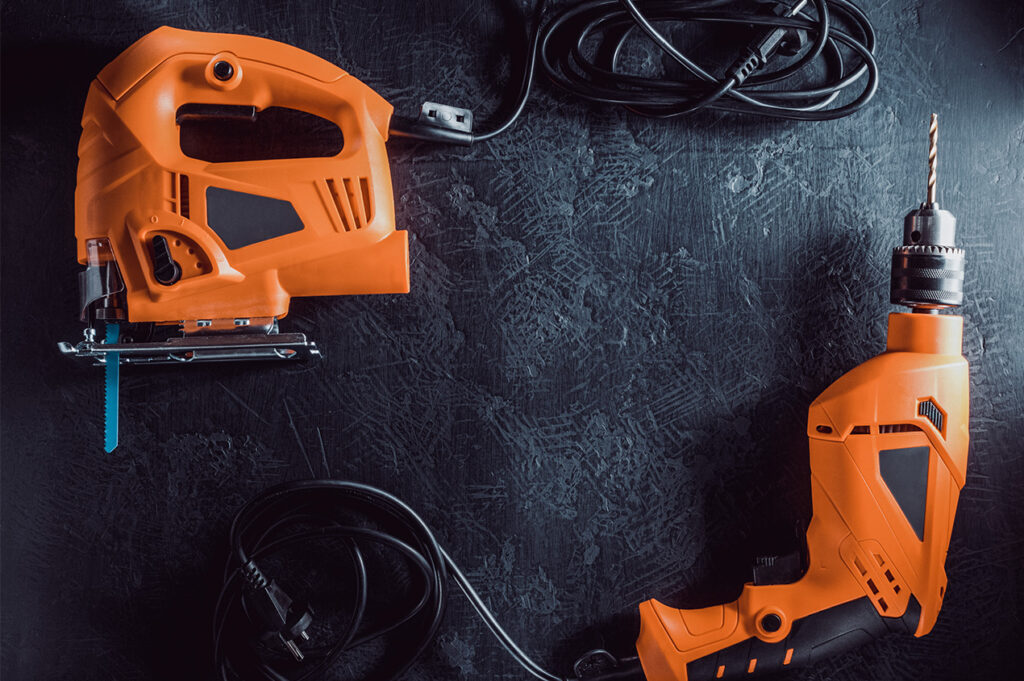
The inspection of electrical tools involves several steps, such as visual inspection, measurement, and testing. Visual inspection involves examining the tool for visible damage or wear. Measurement focuses on verifying the correct voltage, current, and resistance. Testing is performed using specialized equipment for insulation testing and current testing.
Proof of inspection and testing of electrical tools
The inspection report must include:
- precise identification of the equipment
- date of inspection,
- assessment of condition – compliant / non-compliant
- assessment of test – compliant / non-compliant
- name and signature of authorized employee
The inspection report must include:
- precise identification of the equipment
- date of inspection,
- results of the inspection
- results of the test, including the measurement method used and values
- evaluation of the test
- overall evaluation of the condition
- determination of the deadline for the next inspection
- name and signature of the authorized employee
Frequently Asked Question (FAQ)
The inspection of electrical tools is essential to ensure work safety, prevent electric shock injuries, and comply with occupational health and safety (OHS) legislation and standards.
It helps to detect mechanical or electrical faults in time, which could pose a danger to the user.
The obligation to carry out inspections and checks is established by Act No. 124/2006 Coll. on Occupational Health and Safety.
The frequency of inspections depends on the type of equipment, its usage, and the environment in which it is used.
In office and administrative spaces, inspections are typically carried out every 1 to 2 years, whereas in more demanding environments – such as workshops, construction sites, or industrial operations – inspections are required every 3 to 12 months.
The exact intervals are defined by technical standards:
STN 33 1500 – General rules for inspections of electrical equipment,
STN 33 1610 – Inspections and checks of electrical appliances,
STN 33 1600 – Inspections and checks of portable electric tools.
A new technical standard, STN 33 1630:2025, has come into effect. It specifies the procedure for performing inspections and checks of electrical appliances and extension cords during their operational use.
The inspection of electrical tools may only be carried out by a qualified professional – a certified inspection technician with valid authorization in accordance with Decree No. 508/2009 Coll., which sets the requirements for professional competence in the field of electrical engineering.
The technician must hold a certificate for the relevant scope of work (e.g. inspection of portable electrical equipment) and is required to maintain records of each inspection or revision performed.
An inspection is a basic visual check of the equipment, focused on verifying its external condition, signs of damage, and basic functionality.
It is performed more frequently and can often be carried out by internal staff.
A revision (electrical inspection report) is a professional assessment of the technical condition of electrical equipment, which also includes electrical measurements (such as voltage, resistance, and insulation).
Revisions may only be conducted by a certified inspection technician, and the results must be recorded in an official inspection report (protocol).
Using uninspected or untested electrical tools poses a serious safety risk. It can lead to:
-
electric shock,
-
fire caused by short circuit or overload,
-
workplace injury due to technical malfunction,
-
and, in case of a Labour Inspectorate audit, a fine for breaching occupational health and safety regulations (OHS).
Responsibility lies with the employer or operator, who is legally required to ensure that all work equipment is maintained in a safe technical condition.