The construction of electric vehicle charging stations has become a common part of modernizing residential buildings, administrative facilities, and industrial sites in recent years. However, as the number of electric vehicles increases, safety requirements are also rising – especially in the area of fire protection. Installing chargers today does not simply mean “adding electrical infrastructure,” but also verifying whether the building is prepared from the perspective of a Fire Safety Design (FSD) project.
In many cases, it is necessary to update the existing FSD project — not only due to legislation, but primarily because of real risks associated with the operation of battery technologies in enclosed or semi-enclosed spaces.
Why is updating the FSD project necessary?
Increased risk
Charging stations introduce higher thermal and fire risks.
Structural modifications
Interventions in construction or evacuation routes may be required.
New technology
Installation changes both the character of the space and its safety profile.
Technical systems
Often it is necessary to add fire alarm systems (FAS), ventilation, or detection elements.
Mandatory updates
Legislation requires FSD adjustments whenever technology changes.
Fire brigade requirements
Approval usually requires current FSD documentation.
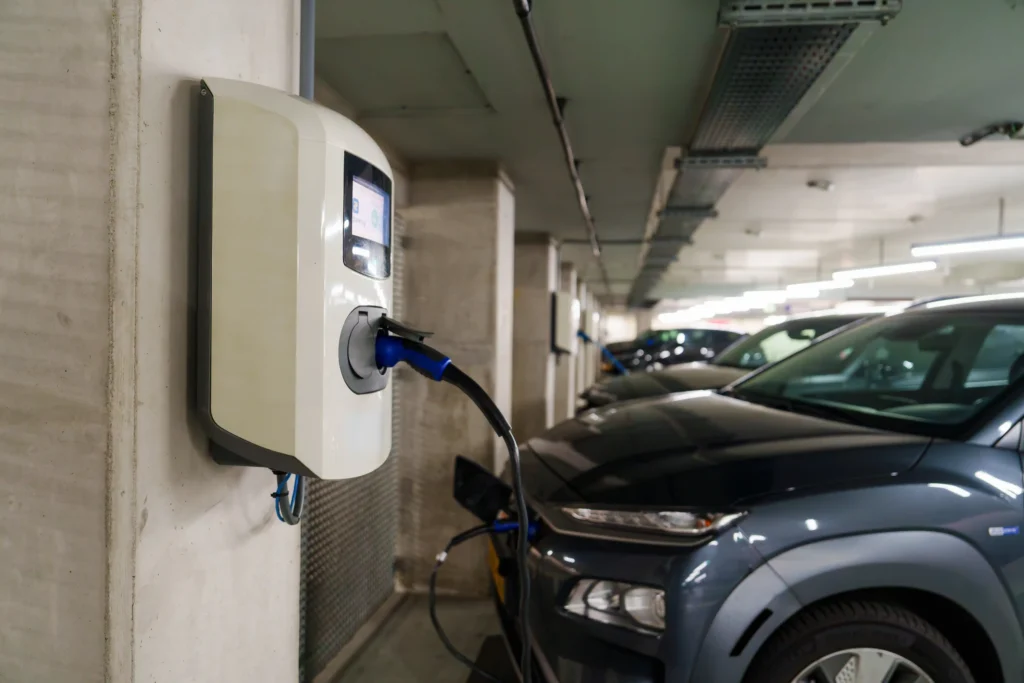

Are you planning to install EV charging stations in a garage or underground parking facility?
Specifics of fire safety for charging stations
Risks of electric vehicles and plug-in hybrids
Thermal runaway and toxic emissions – battery vehicles may, in case of failure, cause thermal runaway, intense combustion, and release of toxic gases.
Technical requirements for spaces
Changes to layout and operational conditions – chargers may require changes in space usage, structural evaluation, and reorganization of parking areas.
Fire protection and safety systems
Detection, ventilation, FAS – operation of charging stations often requires upgrades to fire alarm systems, additional detection, ventilation, and emergency shutdown solutions.
Why does it matter?
Charging stations significantly change how a space behaves in terms of heat, flammability, and technology. These impacts must be assessed before installation, to ensure the environment is safe and that the approval process proceeds smoothly.
When is an FSD update required?
When changing electrical installation or load capacity
Installing chargers significantly changes electrical load, which must be incorporated into the FSD.When fire risk classification changes
Battery technologies affect space categorization and safety requirements.When adding technology to garages or parking facilities
In enclosed areas, ventilation, evacuation routes, and heat propagation must be assessed.At the request of building authorities or fire departments
Authorities often require updated FSD documentation for approval of charging stations.During related construction modifications
Any changes to structures, partitions, or fire signaling must be reflected in documentation.

Final recommendation for safe integration of charging stations
Charging stations significantly affect a building’s fire risk, technical requirements, and documentation obligations. Many buildings still do not have FSD documentation prepared for modern electromobility technologies, which can lead to complications during approval, unnecessary delays, or even dangerous situations in operation.
Updating the FSD project is a key step to ensure safe operation of charging stations, compliance with legislation, and a smooth approval process. If you want to be sure your building is ready for electromobility without risks or additional costs, we will be happy to help.