Firestop penetrations may seem inconspicuous, but they are a crucial element of passive fire protection. They protect what could make all the difference in a fire – time, escape routes, and valuable property. However, in practice, this area sees surprisingly many mistakes, which can compromise the entire fire safety system of the building. Let’s look at the 6 most common firestop penetrations mistakes and how to avoid them to ensure your building passes even the toughest test.
1. Use of Non-Certified or Incompatible Materials
Many penetrations are “sealed” with any available material – regular silicone, mounting foam, or caulk, which are not designed for fire sealing. These makeshift solutions may temporarily cover the gap, but they lose functionality in a fire – they melt, burn, or crumble, allowing the fire to spread quickly.

Problem
These materials do not prevent the spread of flames or smoke in a fire – they do not expand, do not seal, and do not function properly.
Proper Solution
Always use certified firestop systems with valid test reports. These systems are tested for specific types of installations (e.g., cables, pipes, or mixed penetrations) and have proven fire resistance.
2. Penetrations Without Labeling and Documentation
The firestop may be correctly installed, but missing identification and technical documentation is a common issue. This might seem like a minor detail, but in practice, it becomes a major problem – especially during inspections, renovations, or fire audits. Without proper labeling, it’s unclear what system was used, its fire resistance, who installed it, and when. During technical modifications, this can also lead to accidental damage. In inspections, doubts about compliance with the design and legislation may arise – which could lead to approval denial or an order for corrective action.

Problem
During inspections or maintenance, no one knows what system was used, its resistance level, or when the penetration was installed. As a result, firestops may be damaged or replaced with incompatible materials.
Proper Solution
Each firestop should be clearly labeled with a tag that includes details on the solution type, materials used, installation date, and certification. Internal documentation of these firestops should also be maintained.
3. Incomplete Penetration Sealing – Air Gaps
The penetration may look sealed, but gaps remain between the firestop material (e.g., sealant or collar) and the structure. These air gaps act like chimneys, allowing smoke and fire to spread. From the outside, the penetration may look fine, but it lacks the critical filling inside that ensures the declared fire resistance.
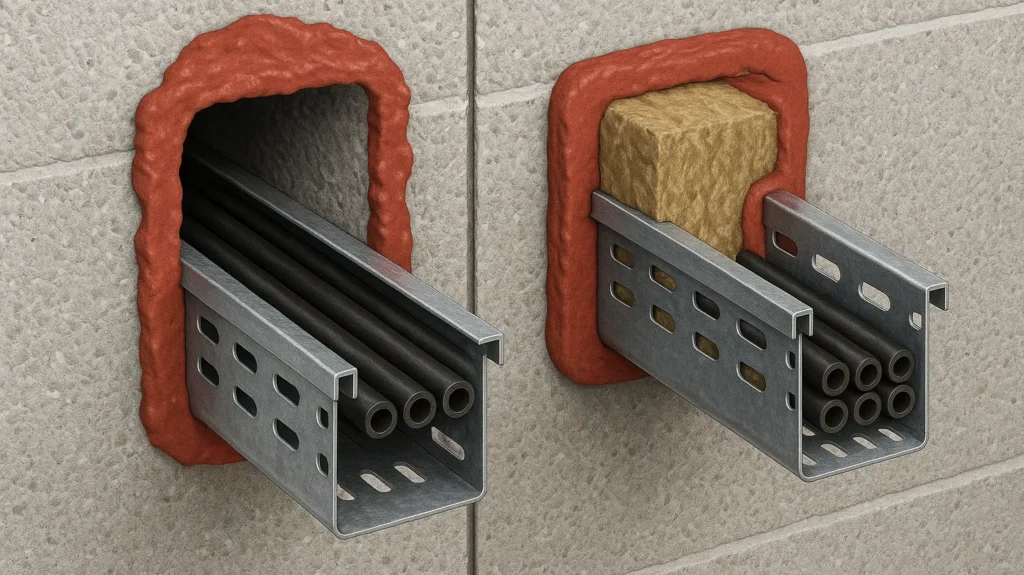
Problem
Zdanlivo utesnený prestup v skutočnosti obsahuje skryté dutiny, cez ktoré sa pri požiari môžu šíriť plamene alebo horúce plyny. Vizualita klame – reálna ochrana chýba.
Proper Solution
Každý prestup musí byť vyplnený do hĺbky podľa typu riešenia – či už pomocou minerálnej vlny, protipožiarnych výplní, alebo kombinovaného systému. Kritická je nielen povrchová vrstva, ale aj to, čo je „vo vnútri“.
4. Damaged Firestop After Renovation
After replacing technologies (e.g., air conditioning, new cables), firestops are often reopened but not resealed correctly – or at all. This compromises their original fire protection function and creates hidden risks that may go unnoticed – until it’s too late.
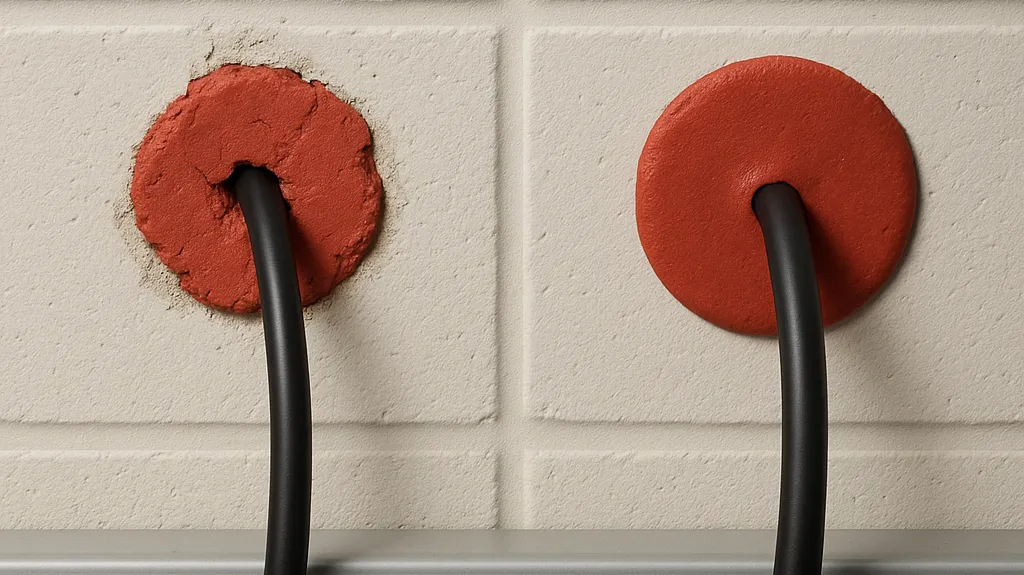
Problem
When new cables or pipes are added, the original seal is often broken or completely removed – and never restored. The firestop loses its resistance, even if it still "looks fine".
Proper Solution
Every intervention in a firestop must follow a controlled procedure, professional installation, and updated documentation. Modular firestop solutions are recommended, as they allow for easier maintenance and future modifications.
5. Wrong Firestop System for the Application
Using the wrong type of system – for example, a collar on a plastic pipe that requires a cap, or sealant not designed for mixed penetrations – can fail in a fire. These “alternative fixes” were not tested for the specific application and do not guarantee the declared fire resistance.
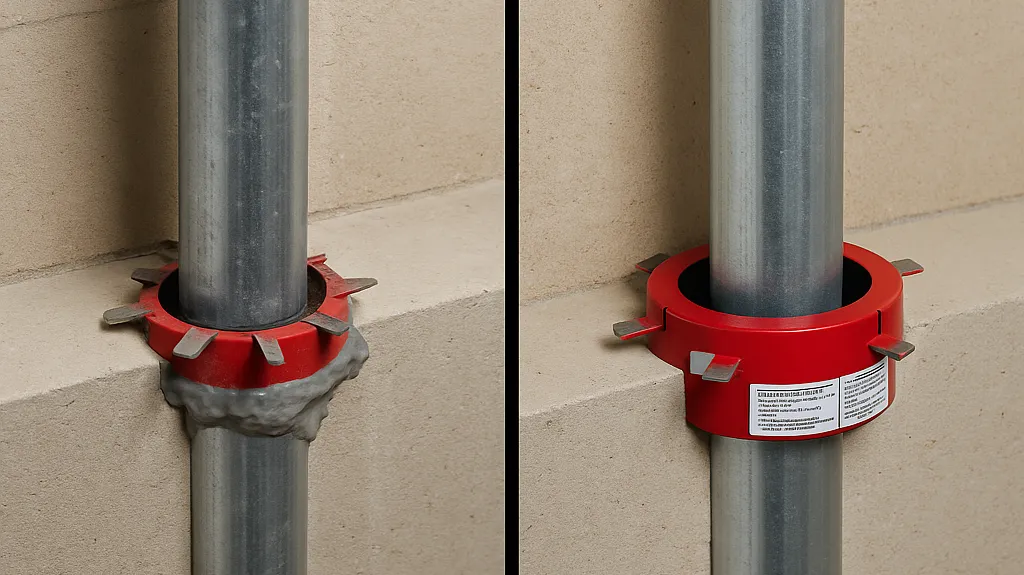
Problem
Each penetration has its own specifics – cables, pipes, combinations of materials. If an incompatible or universal system is used, it may not function properly under real stress. The result is a false sense of security and ineffective fire protection.
Proper Solution
Always follow the manufacturer’s technical documentation and approved application details. Each type of installation requires a specific system – not everything can be “filled in” universally.
6. Plastic Pipes Without Fire Collar or Graphite Tape
Problem
Some installation companies neglect to use special fire protection systems (such as graphite tape or fire collars) when installing plastic pipes through fire-rated barriers (e.g., walls and ceilings). During a fire, plastic pipes melt quickly, creating gaps that allow flames, smoke, and toxic gases to spread to other parts of the building. This is a serious breach of fire regulations and can have fatal consequences.
Proper Solution
Every penetration of a plastic pipe through a fire-rated structure must be equipped with a certified fire collar or graphite tape, which expands at high temperatures to mechanically seal the opening. The solution must match the pipe’s diameter, the structure type, and the manufacturer's certification. Proper installation, overlap, and documentation are crucial.
Firestop penetrations may be small details but have a huge impact. If done incorrectly, they can compromise even the best construction. Done properly, they protect lives and assets.
Not sure if your firestops are compliant? Rely on professionals to design, deliver, and install reliable fire protection solutions for your building.