The safety of modern technologies has become one of the most widely discussed topics in the field of fire protection today. While in 2024 we focused on electric vehicle fires in garages, FIRETEST 2026 naturally expanded to other critical areas – photovoltaic systems and battery energy storage, which are increasingly becoming part of buildings, companies and public infrastructure.
Electromobility and decentralized energy systems are growing rapidly in Slovakia. By the end of 2025, more than 24,000 battery electric vehicles were operating on Slovak roads, with forecasts indicating growth to approximately 150,000 vehicles by 2030. At the same time, charging infrastructure continues to expand – today, more than 3,000 public charging points are already available, with thousands more expected in the coming years.
This development brings new challenges not only for designers and building operators, but also for fire and rescue services. Photovoltaic systems, battery storage and charging technologies exhibit specific behavior in the event of damage or fire, which cannot be reliably assessed through theory alone.
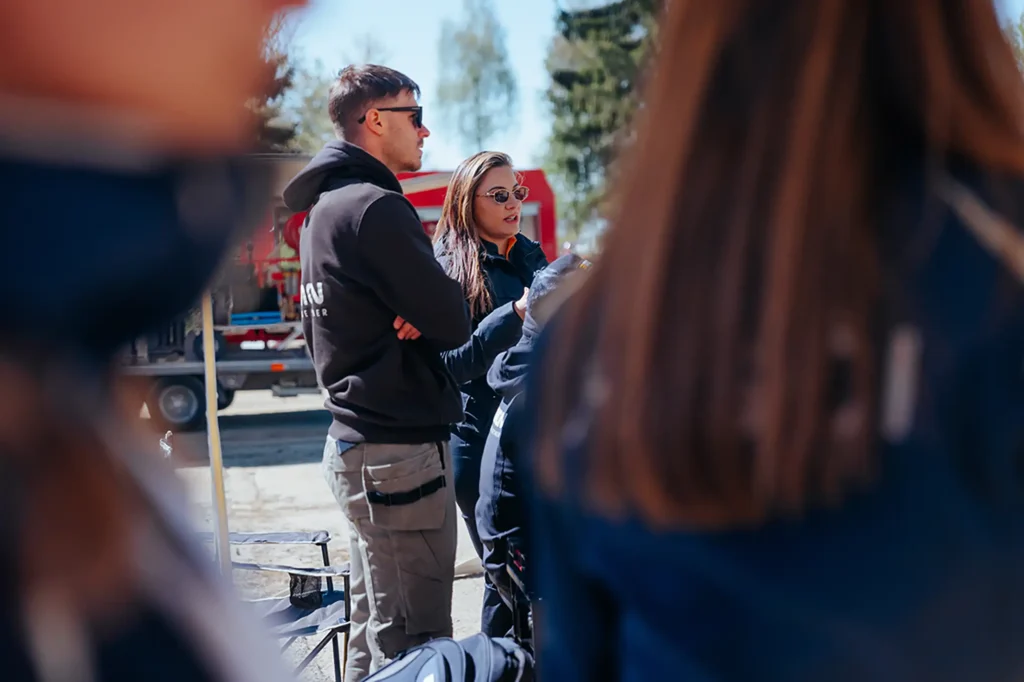
For this reason, FIRETEST was once again conducted under real conditions at the Lešť Training Center, where fires involving these technologies were simulated in a controlled environment. In cooperation with the Fire and Rescue Service of the Slovak Republic (HaZZ) and the Slovak Electric Vehicle Association (SEVA), we were able to take part directly in testing scenarios that reflect the current development of energy systems and electromobility in practice – and provide answers to the questions the market is asking today.
Preparation for FIRETEST 2026
FIRETEST 2026 focused on one of the key topics of the safe transformation of the energy sector – fire protection in the field of renewable energy, specifically photovoltaic systems, battery energy storage systems (BESS), and related electrical installations.
The principles of safe installation of photovoltaic systems play a crucial role in the prevention of failures and fires. As the use of these technologies in buildings and infrastructure continues to grow, so does the need for a systematic approach to fire safety already at the design and installation stage. Particular emphasis must be placed on high‑quality project documentation – covering both electrical installations and fire safety design – correct placement of technologies, compliance with separation distances, creation of access routes for fire brigades, safe cable routing, the possibility of central system shutdown, and clear identification of buildings equipped with PV systems.
The objective of the test was to simulate conditions as realistically as possible that firefighters and system operators may encounter in real‑world scenarios.
FIRETEST 2026 Execution
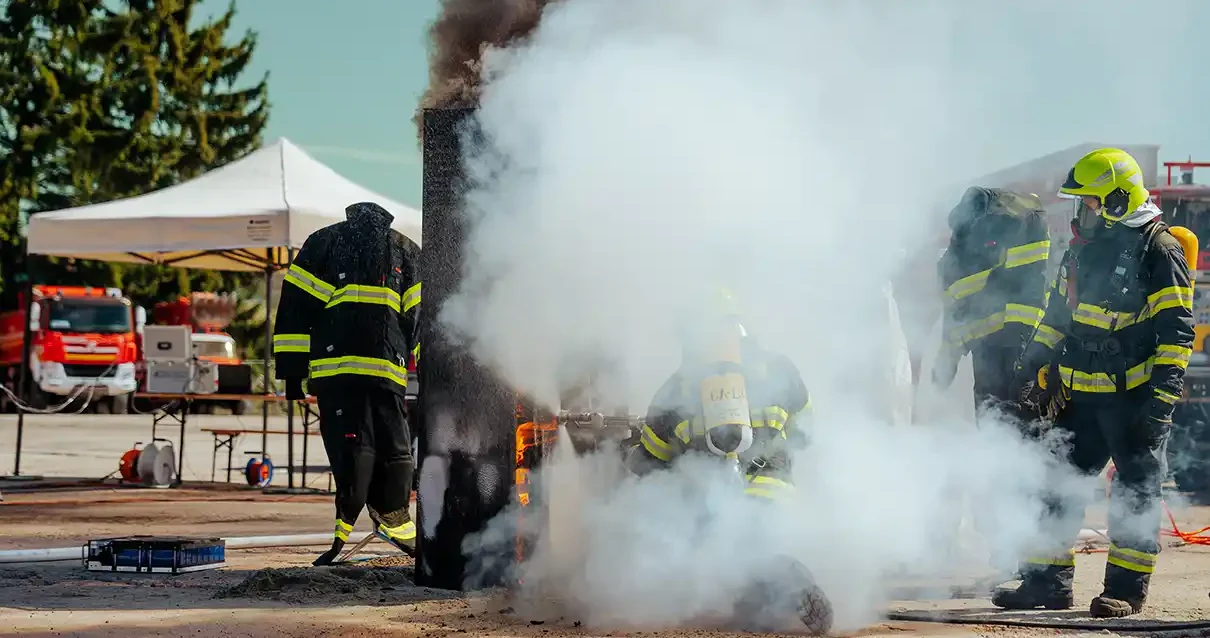
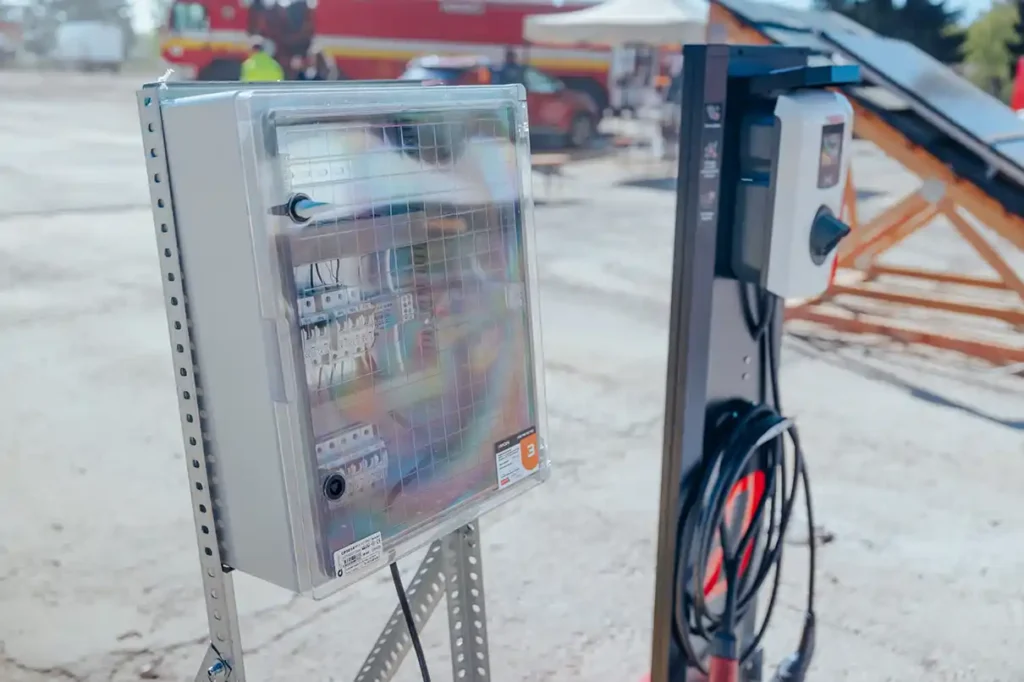
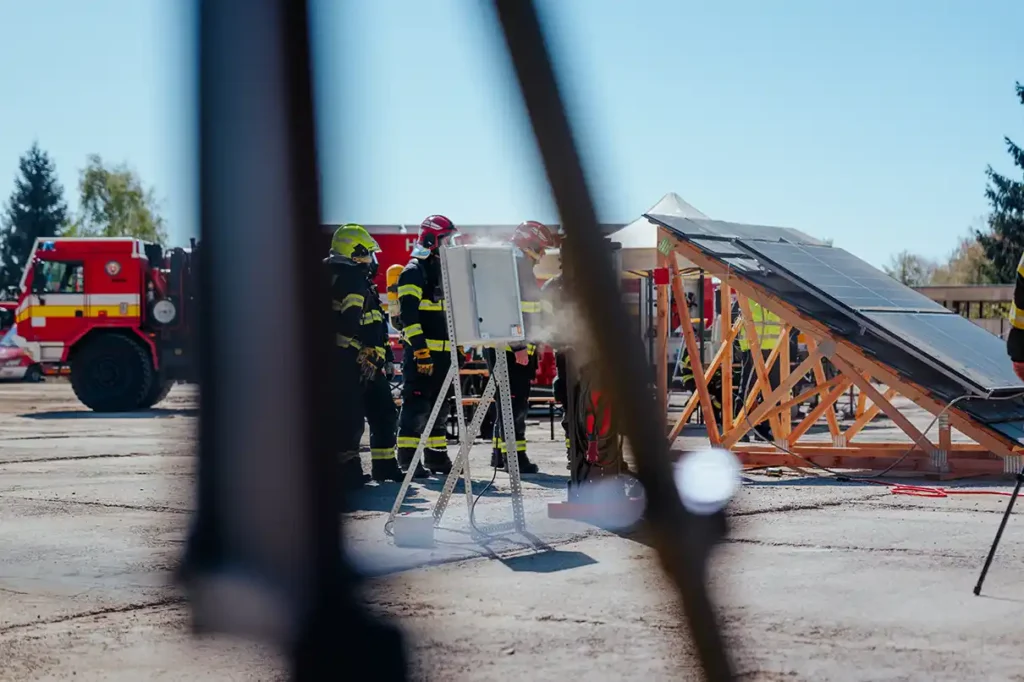
he first part of the practical demonstrations focused on an outdoor wallbox installation. However, the wallbox itself was not tested intentionally – instead, the focus was placed on the electrical distribution board, which is most often the source of failures and subsequent fires in real‑world scenarios. An automatic fire suppression device MAUS STIX Pro was installed inside the distribution board. Following a simulated short circuit, the device was activated by thermal detection at a temperature of approximately 170 °C and filled the internal space with a potassium‑based extinguishing agent. This demonstration also presented an environmentally friendly fire suppression principle without secondary damage.
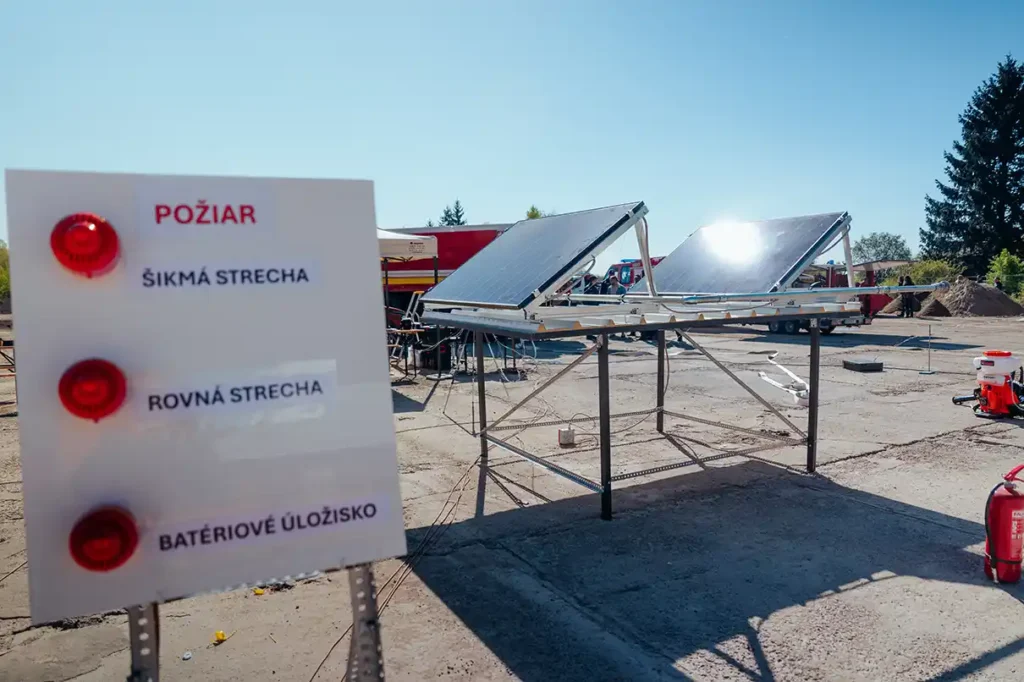
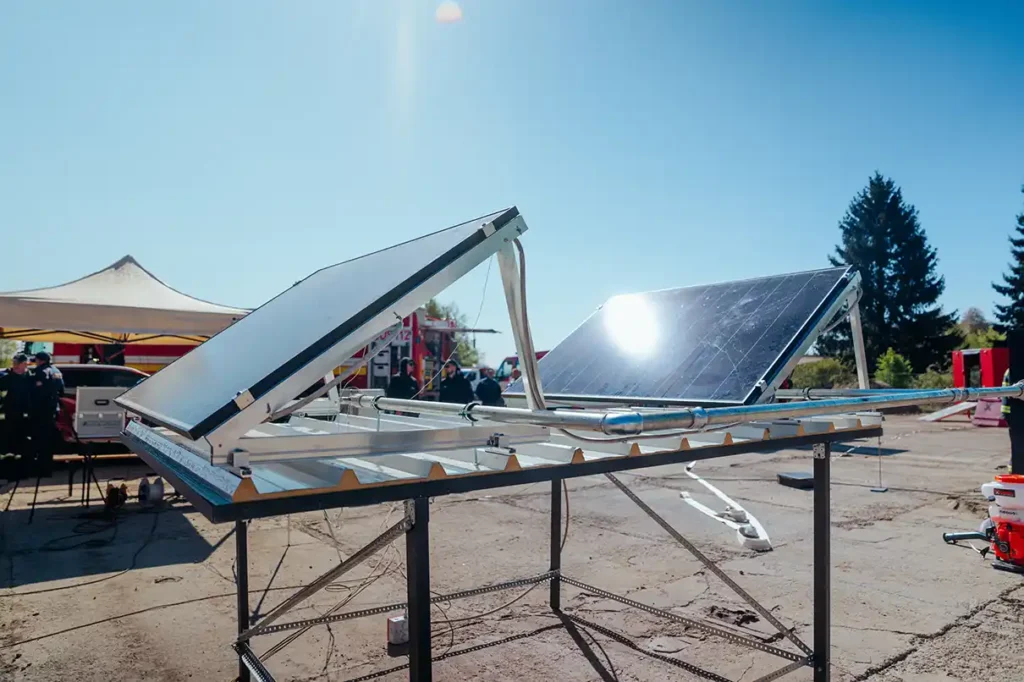
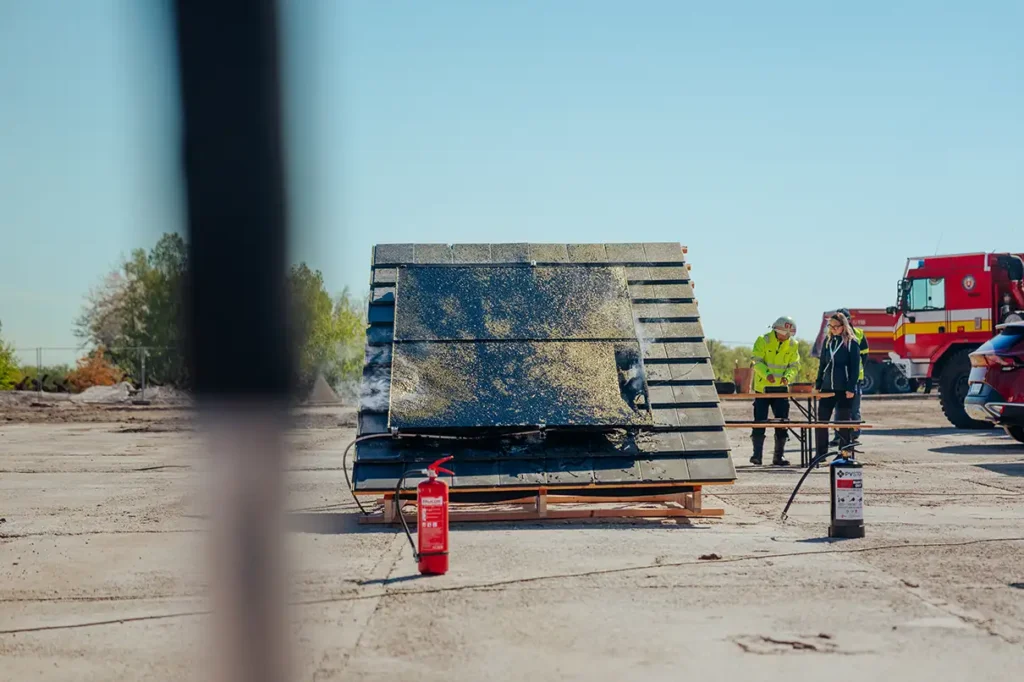
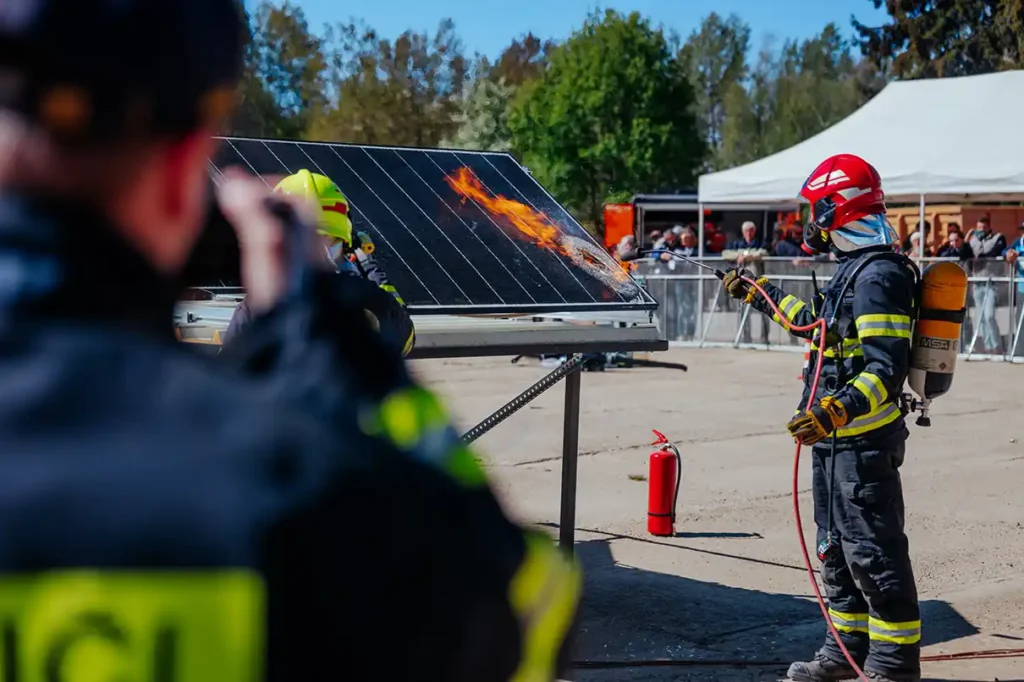
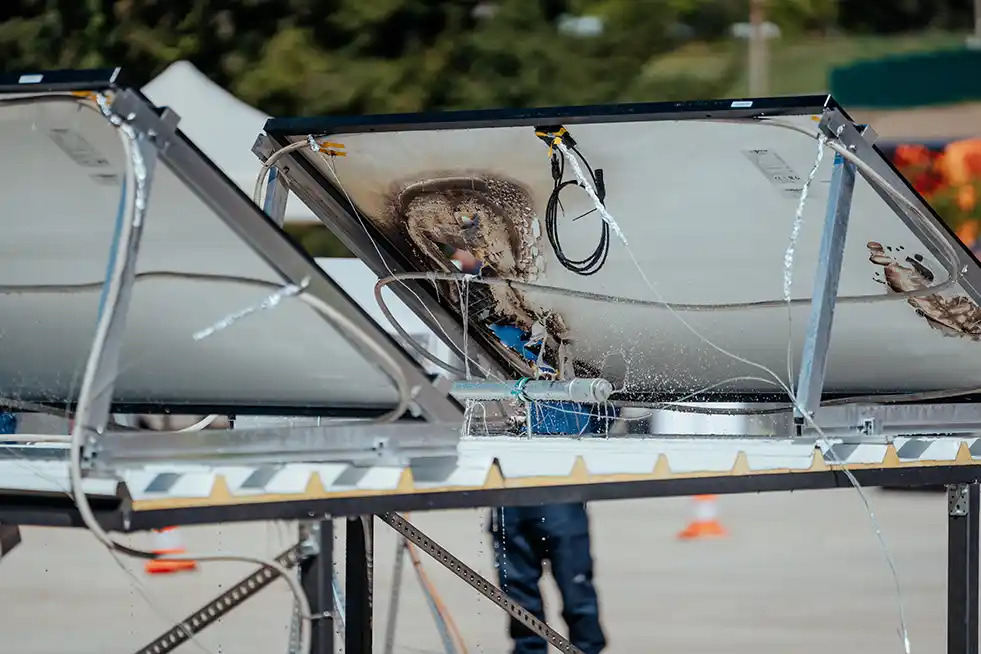
The test then moved to a pitched roof equipped with VITVOLT 300 photovoltaic panels. The fire was initiated using an open flame in order to controllably simulate a fire originating in the photovoltaic structure. In addition to observing the behavior of the structure during the fire, one of the key objectives was to verify the functionality and reliability of early thermal detection using the LISTEC detection cable, which operates as an electrical fire alarm system (EPS). The test also highlighted the importance of material reaction to fire and the development of new photovoltaic panel types classified as A1 (glass–glass), which do not contribute to fire spread. The use of older panel models made it possible to observe the behavior of existing systems under real operating conditions.
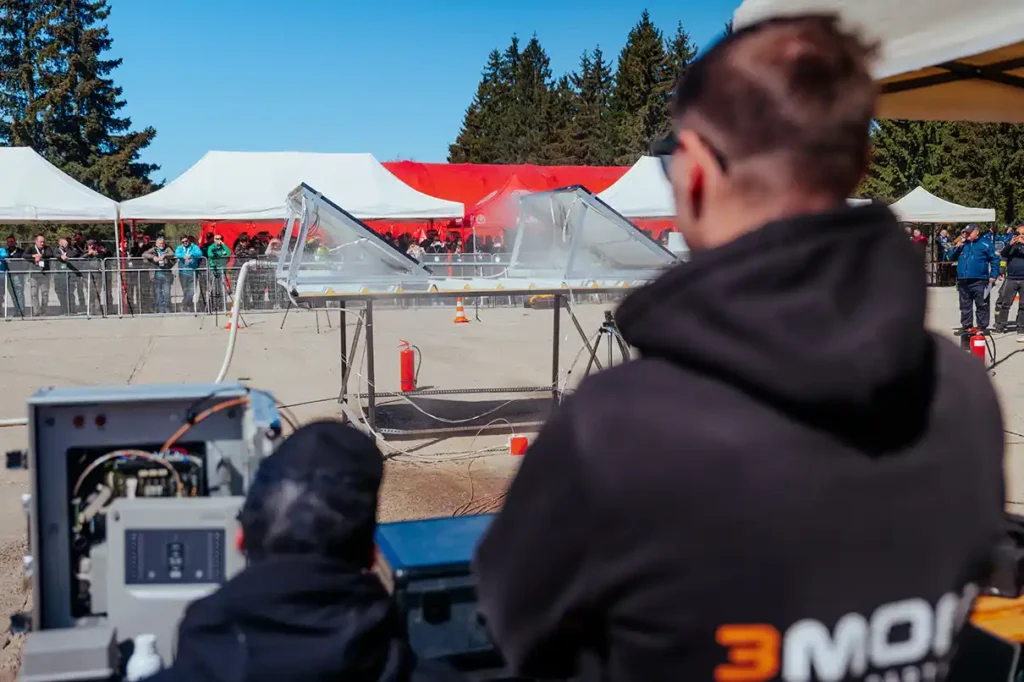
Another part of the test was carried out on a flat roof, where a photovoltaic system fire was simulated using the same principle of early detection, but with a different fire suppression solution.
The final scenario focused on a battery energy storage system (BESS) with a capacity of 25 kWh. The fire was initiated using an open flame to assess system behavior, detection speed, and the possibilities of early intervention before full fire development.
RTVS Report:
Operation of Fire Protection Technologies and Firefighting Units
In photovoltaic systems, linear heat detection using the LISTEC cable was deployed. The system is classified as an electrical fire alarm system (EPS) in accordance with EN 54, and is accepted by insurance companies as an enhancement of the level of fire protection. The detection cable was installed directly within the panel area, enabling early identification of thermal anomalies.
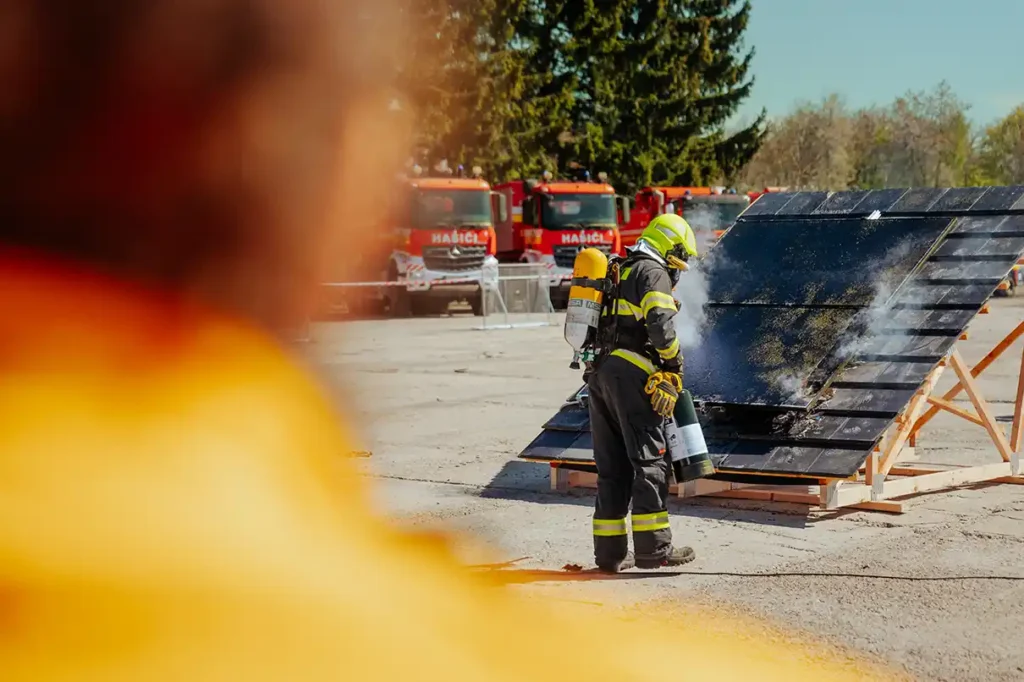
Firefighting units subsequently demonstrated the extinguishing of photovoltaic panels using a fire extinguisher with a polymer‑based agent. After application, the agent forms an impermeable layer on the panel surface, which within seconds significantly reduces electrical power generation and thus lowers the risk of electrical hazards to responding units.
On the flat roof, in addition to LISTEC detection, a water mist system PV Protect Stop by MINIMAX was deployed. This system is specifically designed for extinguishing fires on photovoltaic roofs and for minimizing consequential damage.
During the battery energy storage system (BESS) fire, a key role was played by ASD Securiton Fire aspirating smoke detection. Suction piping was installed inside the battery rack enclosure, providing continuous monitoring of smoke concentration using optical detectors. Within seconds of fire initiation, the system identified the risk and enabled an early response at a very early stage of fire development.
Legislative Changes for the Future of Fire Safety in Photovoltaic Systems
FIRETEST 2026 confirmed the importance of practical testing of modern technologies under real‑world conditions. During the individual scenarios, valuable technical data and observations were collected, providing a better understanding of the behavior of photovoltaic systems and battery energy storage during fire events, as well as the possibilities for early detection and safe intervention.
The insights gained will serve as an expert basis for further discussions and potential updates to the legislative and regulatory framework in the field of fire safety. The objective is to establish rules that reflect real risks, ongoing technological development, and the needs of responding firefighting units.
FIRETEST 2026 once again demonstrated that the safe development of electromobility and renewable energy sources depends on the close integration of practical experience, modern technologies, and cooperation with fire brigades – a principle long emphasized by fire safety specialist and CEO of 3MON, Simona Kalinovská:
„By using state-of-the-art detection, handling and extinguishing systems, we can much better protect not only property, but most importantly human health and lives, including safe conditions for the firefighters themselves.”