Why address floor marking at all?
Without clear marking, operations become unclear and hazardous:
- pedestrian traffic mixes with material‑handling equipment,
- safe and hazardous zones are not clearly separated,
- visual orientation within the space is missing.
The result is an increased risk of workplace injuries, process disruptions, and problems during OHS inspections. Floor marking resolves these situations immediately and clearly through visual communication.
Floor Marking and OHS
From an occupational health and safety perspective, floor marking primarily serves to:
- separate pedestrian routes from equipment traffic,
- mark hazardous and high‑risk zones,
- indicate escape routes and safe areas,
- highlight obstacles, columns, and collision points.
During inspections, emphasis is placed especially on clarity, consistency, and up‑to‑date marking.
Damaged, inconsistent, or outdated markings are often considered just as serious a problem as their complete absence.
Basic Types of Floor Marking
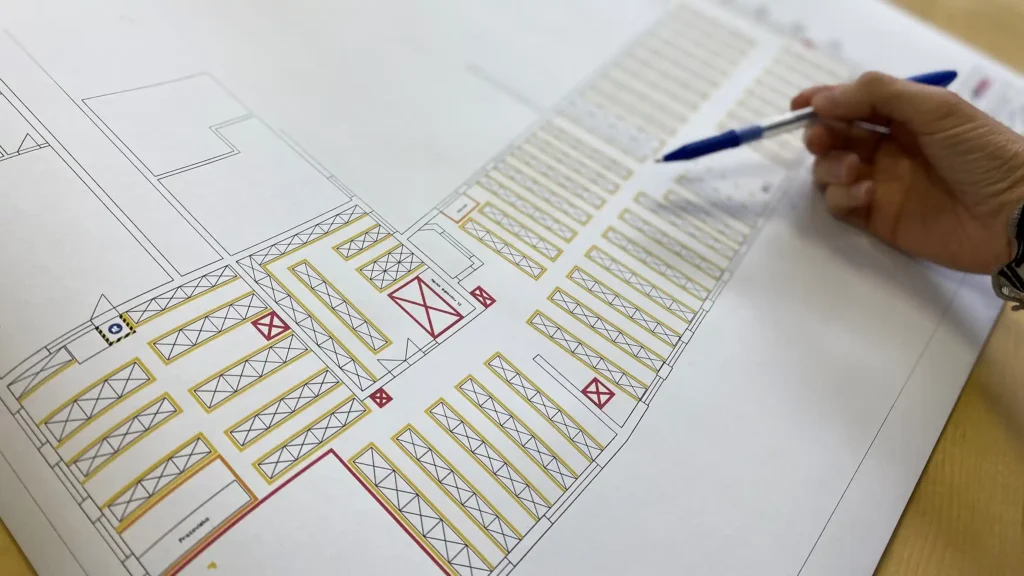
In practice, floor marking consists of several elements that, when properly combined, create a clear and easy‑to‑read system at first glance:
Lines and Routes
– movement of people, forklifts, and material handling, supply and logistics routes
Zoning of Space
– storage areas, workstations, safety distances
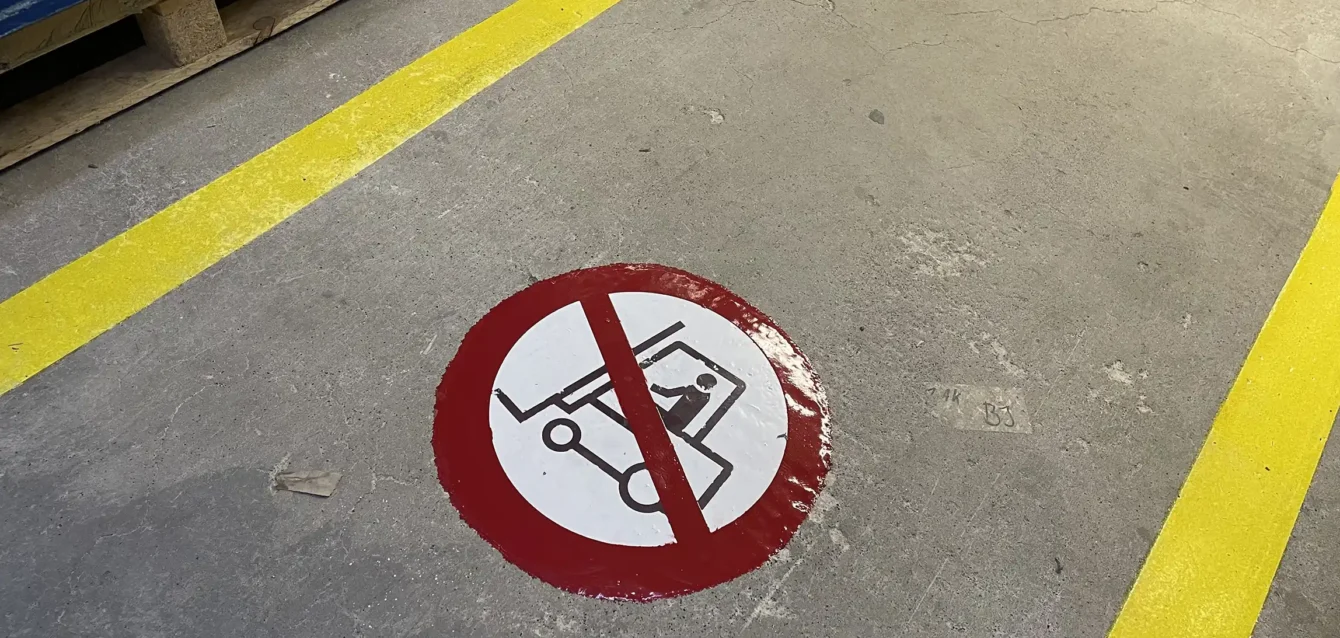
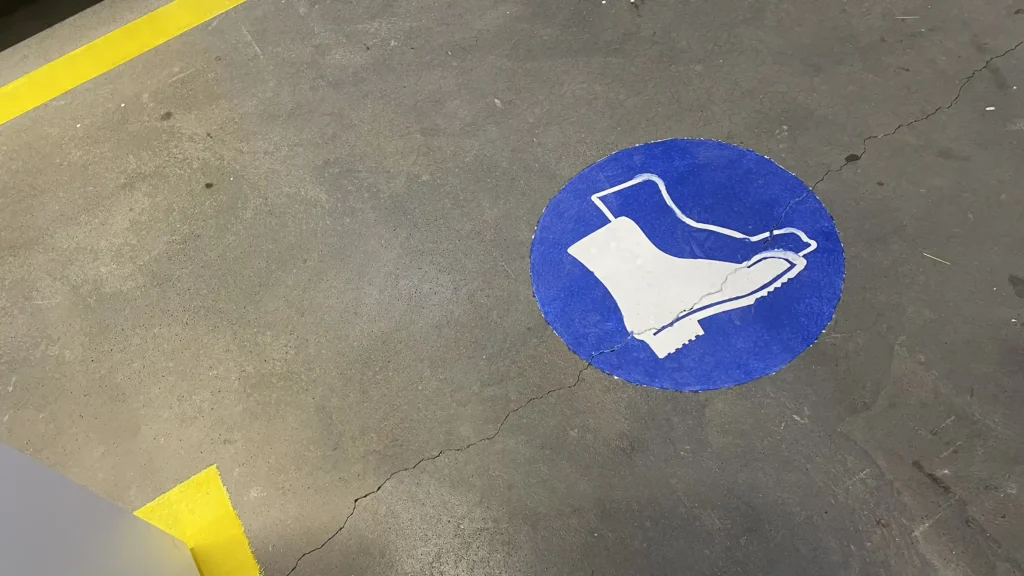
Symbols and Pictograms
– warnings, prohibitions, and orientation signs, aplied directly on the floor
„Floor marking is not a design element, but a functional safety tool. In practice, it determines whether the movement of people and equipment is clear, controlled, and safe.“
Colors of Floor Marking and Their Meaning
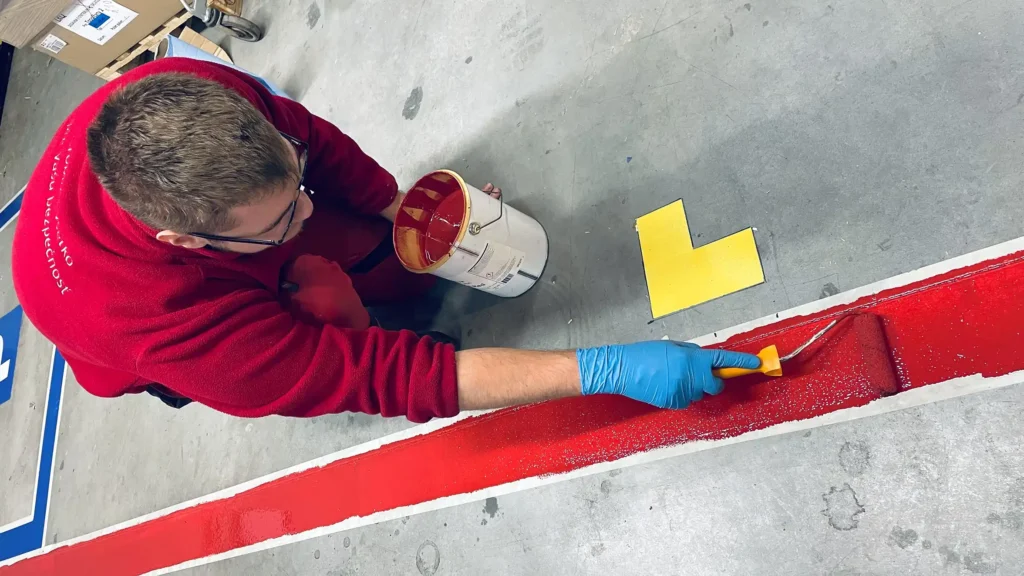
Colors must have a consistent meaning across the entire facility, otherwise they lose their function:
- Yellow – routes, traffic lanes, work areas
- White – organization and storage layout
- Red – prohibition, danger, fire‑safety equipment
- Green – safe zones and escape routes
A common mistake is using the same colors for different purposes or combining them without a clear system.
Implementation of Floor Marking
The method of implementing floor marking must take into account floor load, operational characteristics, and the need to maintain smooth pedestrian traffic. In industrial and logistics environments, it is not feasible to shut down operations and wait several days for conventional paint to cure.
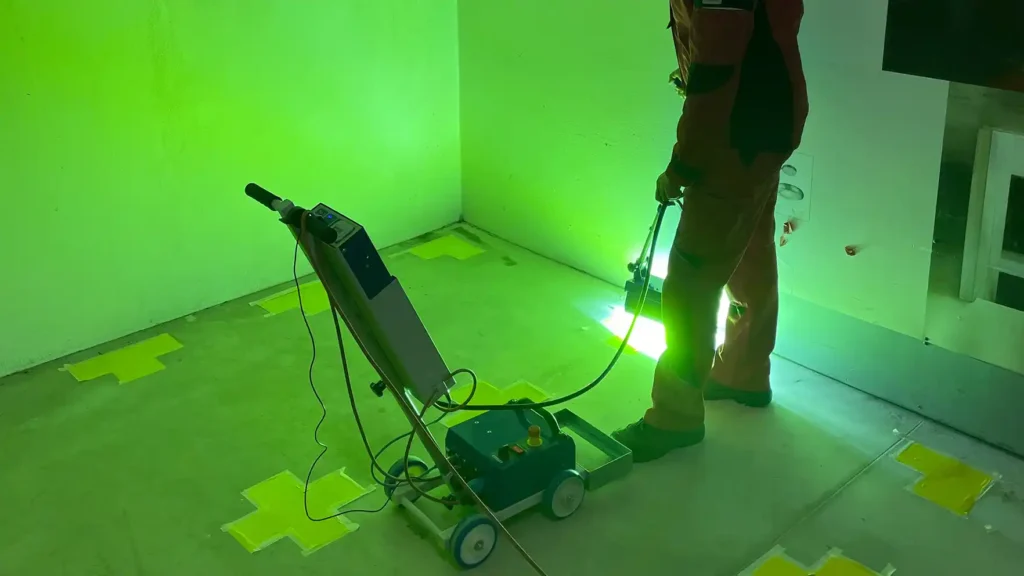
For this reason, we use modern UV technology with immediate curing, which allows application without operational downtime and ensures instant usability of the space.
UV floor marking is characterized by high chemical and mechanical resistance, long service life, and a clean application process without odors or solvents. It is suitable even for demanding conditions at temperatures from –25 °C to +35 °C. Each marking is designed according to actual movement of people and equipment and in line with OHS requirements to ensure clarity, consistency, and functionality even under intensive use.
Floor Marking by 3MON
At 3MON, we provide both design and implementation of floor marking, with full respect for OHS requirements and real workplace conditions. Each solution is tailored to the specific space and its intended use.
More information and a contact form can be found on our website: Floor Marking.